NYC’s Leading Integrative Health Care Center

Anti-Aging and Longevity Treatments Remember when you were in college and stayed up all night drinking beer, eating pizza, and partying; yet you still were able to attend class in the morning? How many of you could do that now?
Medically reviewed by Rashmi Gulati, MD — · Last updated November 2026
Physician-supervised acupuncture at our Fifth Avenue practice on the Upper East Side. We use it where research is strongest, mainly chronic pain, headache and migraine prevention. We also use it as a supportive therapy for sleep, stress and menopause symptoms, inside a plan that looks for what’s actually driving your symptoms.
Integrative care since 1974
Licensed acupuncturist (L.Ac.)
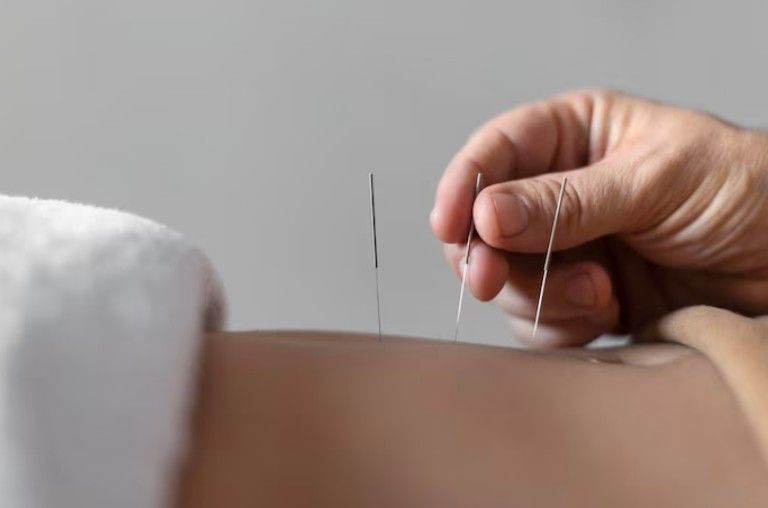
Acupuncture is a treatment in which a trained practitioner places very thin, sterile, single-use needles at specific points on the body, sometimes adding a gentle electrical current. The best evidence supports it for chronic low back and neck pain, knee osteoarthritis, tension headaches and migraine prevention. Evidence for hot flashes, seasonal allergies, fibromyalgia, sleep and digestive complaints is more limited or mixed.
In trials, acupuncture beats no treatment by a clear margin and sham (simulated) acupuncture by a smaller one. So the relief is usually real but moderate. Done by a licensed practitioner, it is generally safe.
Acupuncture suits adults with ongoing symptoms who want a drug-free option or something to add to their current care. You may be a good candidate if:
Not sure it fits? Read about back and neck pain, migraine headaches or pain management, or call us to talk it through.
Acupuncture shouldn’t delay a proper diagnosis. New York law requires licensed acupuncturists to advise patients to consult a physician. At Patients Medical, a physician is already part of your care.
Acupuncture is one tool. Your plan also addresses whatever underlying causes your evaluation finds.
We tell you what the research supports and what it doesn’t. “Sham” means simulated acupuncture used as a placebo in trials.
| Condition | Evidence | What studies show | Role in your plan |
|---|---|---|---|
| Chronic low back pain | Moderate | Pain relief beyond no treatment, smaller edge over sham. The American College of Physicians lists it among first-line non-drug options. | Core therapy, with exercise |
| Neck pain | Moderate | Short-term pain relief for many people | Core therapy |
| Knee osteoarthritis | Moderate | Better than no treatment and sham for pain; the effect is modest | Core, with exercise and weight care |
| Migraine prevention | Moderate | Fewer headache days for some. A 2020 review found it slightly more effective than preventive drugs, with fewer people stopping due to side effects. | Core, or alongside medication |
| Tension-type headache | Low–moderate | May reduce how often headaches happen | Supportive |
| Fibromyalgia | Low–moderate | Better than sham for pain in a 2019 review; study quality varies | Part of a multi-step plan |
| Menopause hot flashes | Low–moderate | Fewer, milder hot flashes than no acupuncture, but not better than sham | Supportive |
| Seasonal allergies | Low–moderate | May ease nasal symptoms and reduce medication use | Supportive |
| Chemotherapy nausea | Moderate (older trials) | Helps, but it’s unclear how much it adds to modern anti-nausea drugs | Add-on, with your oncologist’s approval |
| IBS | Low / mixed | No better than sham on its own; may help when added to other treatment | Add-on only |
| Insomnia, anxiety | Limited / mixed | Small trials with inconsistent results | Add-on only |
| Depression | Low quality | Some improvement vs usual care, but most studies are low quality | Add-on only; never replaces mental-health care |
Summary based on the NIH National Center for Complementary and Integrative Health (NCCIH) and the American College of Physicians low back pain guideline. See references below.
Scientists don’t fully understand how acupuncture works yet. Research points to several effects working together.
Needling stimulates nerves in the skin and muscle, which send signals to the spinal cord and brain.
It may change how the brain and spinal cord process pain, including releasing the body’s own pain-relieving chemicals (endorphins).
Studies show direct effects on connective tissue around the needle, which may ease muscle tension.
Sessions may calm the body’s stress response, which can help with tension and sleep.
Part of the benefit comes from nonspecific effects such as expectation and the care setting. That’s why we set honest, measurable goals.
Traditional Chinese medicine describes points along channels (meridians) that balance the body’s energy, or qi.
Your acupuncturist chooses the technique based on your symptoms, health history and comfort.
Fine needles placed at selected points and left in while you rest. It’s the most studied form, used for pain, headache, stress and sleep.
A mild electrical pulse passes between pairs of needles, often for stubborn or long-standing pain. It isn’t used if you have a pacemaker or other implanted electrical device.
Small needles on points of the outer ear, used for stress, sleep and relaxation support. It’s quick and easy to combine with body points.
Acupuncture works best as part of a plan. Your physician recommends only what your symptoms and test results support.
Testing as needed for inflammation, thyroid, vitamin D, B12, iron or hormones, to find causes needles can’t fix.
Guided exercise is a first-line treatment for chronic back pain and knee arthritis, and it helps the effects of acupuncture last longer.
A food plan for joint pain, weight and energy. Losing extra weight reduces the load on painful knees.
Screening for sleep apnea and other causes before treating poor sleep as a stress problem.
Breathing, relaxation and mindfulness skills, which guidelines also recommend for chronic pain.
Evaluation and treatment of hormone changes behind hot flashes, sleep disruption and fatigue.
Diet changes, gut testing and treatment when IBS or bloating is part of the picture.
We check blood thinners, supplements and pain medications for safety, and help reduce reliance on pain pills where appropriate.
Four clear steps, so you always know what’s being treated, why, and what comes next.
Review of your symptoms, medical history, medications and goals, plus screening for safety concerns and red flags.
Points and technique chosen for your symptoms, with clear goals, such as pain scores or headache days, to measure progress.
Sterile single-use needles placed by a licensed acupuncturist and left in for about 15–30 minutes while you rest.
We track results across the course, adjust points and frequency, and stop if acupuncture isn’t helping.
Call us or seek urgent care if a needle site becomes red, hot and swollen, you develop a fever, or you get chest pain or shortness of breath after treatment near the chest or upper back.
Results vary, and some people don’t respond. Benefits for pain often last weeks to a few months after a course, and some people choose occasional maintenance sessions. Your physician will set realistic goals with you at your first visit.
The number of sessions depends on your condition, how long you’ve had it and how you respond.
Common, minor side effects
Rare but serious risks
Infection, a punctured lung (pneumothorax) or nerve injury are rare. They are mostly linked to non-sterile needles or improper technique.
How we keep you safe
| Condition | What we do |
|---|---|
| Bleeding disorder or blood thinners | Physician review first; fewer, shallower needles and some sites avoided |
| Pacemaker, ICD or other implanted device | No electroacupuncture; manual needling only, away from the device |
| Pregnancy or trying to conceive | Certain points avoided; we coordinate with your obstetrician |
| Skin infection, wound or rash | No needling in that area |
| Seizure disorder | Treatment only if well controlled, with extra monitoring |
| Weakened immune system | Physician clearance and extra infection precautions |
| Fear of needles or past fainting | Treatment lying down, fewer needles, a gradual start |
| Metal (nickel) allergy | Needle type discussed before treatment |
In New York State, only a licensed acupuncturist (L.Ac.), or a physician or dentist certified in acupuncture, may provide acupuncture. Licensed acupuncturists complete an approved acupuncture program and pass a state-approved licensing exam. You can verify any license on the NYSED Office of the Professions website.
At Patients Medical, acupuncture is given by a New York-licensed acupuncturist and supervised by our Medical Director, so it fits safely with the rest of your medical care.
| Acupuncture | Dry needling | |
|---|---|---|
| Approach | A system of points, for pain and other symptoms | Targets tight muscle knots (trigger points) |
| Main use | Pain, headache, and supportive care for sleep, stress and hot flashes | Mostly muscle pain |
| Who provides it in NY | L.Ac., or a certified physician or dentist | Varies by profession and scope |
Serving New York patients since 1974.
Acupuncture is part of an MD-led plan, not a standalone service.
Sterile single-use needles, plus a review of your medications and conditions.
We tell you what research supports, set measurable goals and stop if it isn’t helping.
Pain, sleep, gut, hormones and stress are looked at together.
Superbills for reimbursement and CareCredit financing.
The cost of acupuncture depends on your situation. Your first visit usually costs more than follow-up sessions, because it includes a full review of your health history, medications and goals, a safety screening and, if appropriate, your first treatment. Follow-up sessions are shorter and focus on treatment and progress checks.
Your total cost depends on:
Call us at (212) 794-8800 for current pricing. We’ll explain the expected cost of your plan before you start, so there are no surprises.
Medicare Part B covers acupuncture only for chronic low back pain. That means pain lasting 12 weeks or longer, with no identifiable systemic cause, and not linked to surgery or pregnancy.
Medicare can’t pay licensed acupuncturists directly, so call us to check whether your visits can be billed to Medicare.
Pain, poor sleep and low energy often go together. When they do, acupuncture can sit alongside testing and other therapy in a single plan.
Medical Director
Rashmi Gulati, MD, is a board-certified functional medicine doctor Manhattan and a leading holistic doctor in NYC.
Gynecologist & Obstetrician
Over 20 years of medical experience as a gynecologist.
Patients Medical
1148 Fifth Avenue, Suite 1B, New York, NY 10128
Carnegie Hill, Manhattan
Phone: (212) 794-8800
Hours: [add office hours] · Visits by appointment
Convenient for patients across Manhattan, including the Upper East Side, Carnegie Hill, Yorkville and East Harlem.
Acupuncture is a treatment in which a trained practitioner places very thin, sterile, single-use needles at specific points on the body. It comes from traditional Chinese medicine and is now used worldwide, most often for pain. At Patients Medical it’s given by a New York-licensed acupuncturist as part of a physician-supervised plan.
For some conditions, yes, with realistic expectations. The strongest evidence is for chronic low back and neck pain, knee osteoarthritis, and migraine and tension headache prevention. In trials, acupuncture usually beats no treatment by a clear margin and beats sham (simulated) acupuncture by a smaller one, which means part of the benefit comes from nonspecific effects. The result is often real but moderate relief, not a cure.
We mainly use it for chronic low back pain, neck pain, knee osteoarthritis, migraine and tension headaches, and fibromyalgia. We also use it as a supportive therapy for menopausal hot flashes, seasonal allergies, stress, sleep problems and some digestive complaints, where evidence is more limited. Your physician will tell you honestly how strong the evidence is for your condition.
Most people feel a quick pinch as the needle goes in, then a dull ache, heaviness or tingling around the point. The needles are much thinner than the ones used for injections or blood draws. Many patients find sessions relaxing. Tell your acupuncturist straight away if anything feels sharp or burning, and the needle will be adjusted.
When it’s done by a licensed practitioner using sterile needles, acupuncture is generally safe. Common side effects are minor: soreness at a needle site, a small bruise, slight bleeding or brief light-headedness. Serious problems such as infection or a punctured lung are rare and are mostly linked to improper technique or non-sterile needles. The FDA regulates acupuncture needles as medical devices that must be sterile and labeled for single use.
Few people are completely excluded, but some need precautions. Tell us before treatment if you have a bleeding disorder or take blood thinners, have a pacemaker or other implanted electrical device (electroacupuncture is avoided), are pregnant, have a skin infection or wound where needles would go, have a seizure disorder, have a weakened immune system, or have fainted with needles before.
It depends on your condition, how long you’ve had it and how you respond. Many people start with one or two sessions a week, and many clinical trials use 6 to 12 sessions. We review progress after about 4 to 6 sessions. If you aren’t noticing meaningful change by then, we’ll adjust the plan or stop.
Plan on about 60 to 75 minutes for the first visit, which includes your history and a safety review. Follow-up visits usually take 30 to 45 minutes, with the needles typically left in for about 15 to 30 minutes while you rest.
Yes. Acupuncture is usually most useful alongside other care such as exercise, physical therapy, nutrition changes, sleep treatment or medication. Don’t stop or change any prescribed medication without talking to your physician. Bring a full list of medicines and supplements so we can check for anything that affects bleeding or healing.
Both use thin needles. Dry needling targets tight muscle knots (trigger points) and is mostly used for muscle pain. Acupuncture uses a wider system of points and is used for pain as well as other symptoms. In New York, acupuncture may only be practiced by a licensed acupuncturist or a physician or dentist certified in acupuncture.
Coverage depends on your plan. Some private plans cover acupuncture and others don’t, so check your benefits. We can provide a superbill for out-of-network reimbursement, and acupuncture is often an eligible HSA or FSA expense. Medicare Part B covers acupuncture only for chronic low back pain: up to 12 sessions in 90 days, 8 more if you’re improving, and no more than 20 a year. Call us at (212) 794-8800 for current pricing.
Your first visit starts with a review of your symptoms, medical history, medications and goals, plus screening for any safety concerns. If acupuncture is appropriate, you’ll usually have your first treatment the same day. Eat a light meal beforehand, wear loose clothing and bring your medication list.
It may help some people feel calmer and sleep better, but research on anxiety and insomnia is limited and mixed. We use it as one part of a plan, not on its own. For poor sleep we also screen for causes such as sleep apnea, hormone changes, pain or mood problems, and acupuncture never replaces mental-health care.
Sometimes, with care. Tell us if you’re pregnant or trying to conceive. Certain points are avoided during pregnancy, many practitioners avoid treatment in the first trimester, and we coordinate with your obstetrician. Don’t use acupuncture in place of prenatal care.
Patients Medical specializes in gently helping the patient identify the root cause of their medical issues and then assist them to recover from their problems to help them move forward to good health.
To schedule an in person on Tele-medicine appointment, please call our office at (212) 794-8800 or email us at info@PatientsMedical.com We look forward to hearing from you
Patients Medical PC
1148 Fifth Avenue, Suite 1B New York, NY 10128
Copyright © 2026 Patients Medical. All Rights Reserved.
All information presented in this website is intended for informational purposes only and not for the purpose of rendering medical advice. Statements made on this website have not been evaluated by the Food and Drug Administration. The information contained herein is not intended to diagnose, treat, cure or prevent any disease. Patients Medical.
Disclaimer: THIS WEBSITE DOES NOT PROVIDE MEDICAL ADVICE AND MAY BE OUT OF DATE. The information, including but not limited to text, PDFs, graphics, images, and other material contained on this website, is for general educational purposes only. No material on this site is intended to be a substitute for professional medical advice, diagnosis, or treatment, and does not create a patient-doctor relationship. Pricing on the website may be out of date, is subject to change without notice, and may be subject to additional terms and conditions. No information on this site is intended to be a financial quote for medical services. Always seek the advice of your physician or other qualified healthcare provider with any questions you may have regarding a medical condition, lifestyle or dietary changes, treatments, and before undertaking a new healthcare regimen. Never disregard professional medical advice or delay in seeking it because of something you have read on this website.